A bathroom remodel is a water project wearing a design costume. Tile, paint, and a new vanity are what you photograph. What actually decides whether the room still looks good in five years is the waterproofing, the ventilation, the slope to the drain, and whether you moved plumbing because you wanted to or because you had to. A bathroom renovation that starts with a chandelier and a marble sample is how people blow the budget on surfaces and then cheap out on the shower pan.
I plan bathrooms for houses and small hotels. The first meeting is rarely about style. It is about who uses the room at 6:30 a.m., whether two people need the sink at once, whether a walk-in shower will steal the only place a toilet can legally sit, and whether the fan actually vents outdoors. This guide is the remodel conversation I want every homeowner to have before they pick a grout color: scope, wet-area rules, fixtures that lock the budget, and a trade sequence you can hand to a contractor.
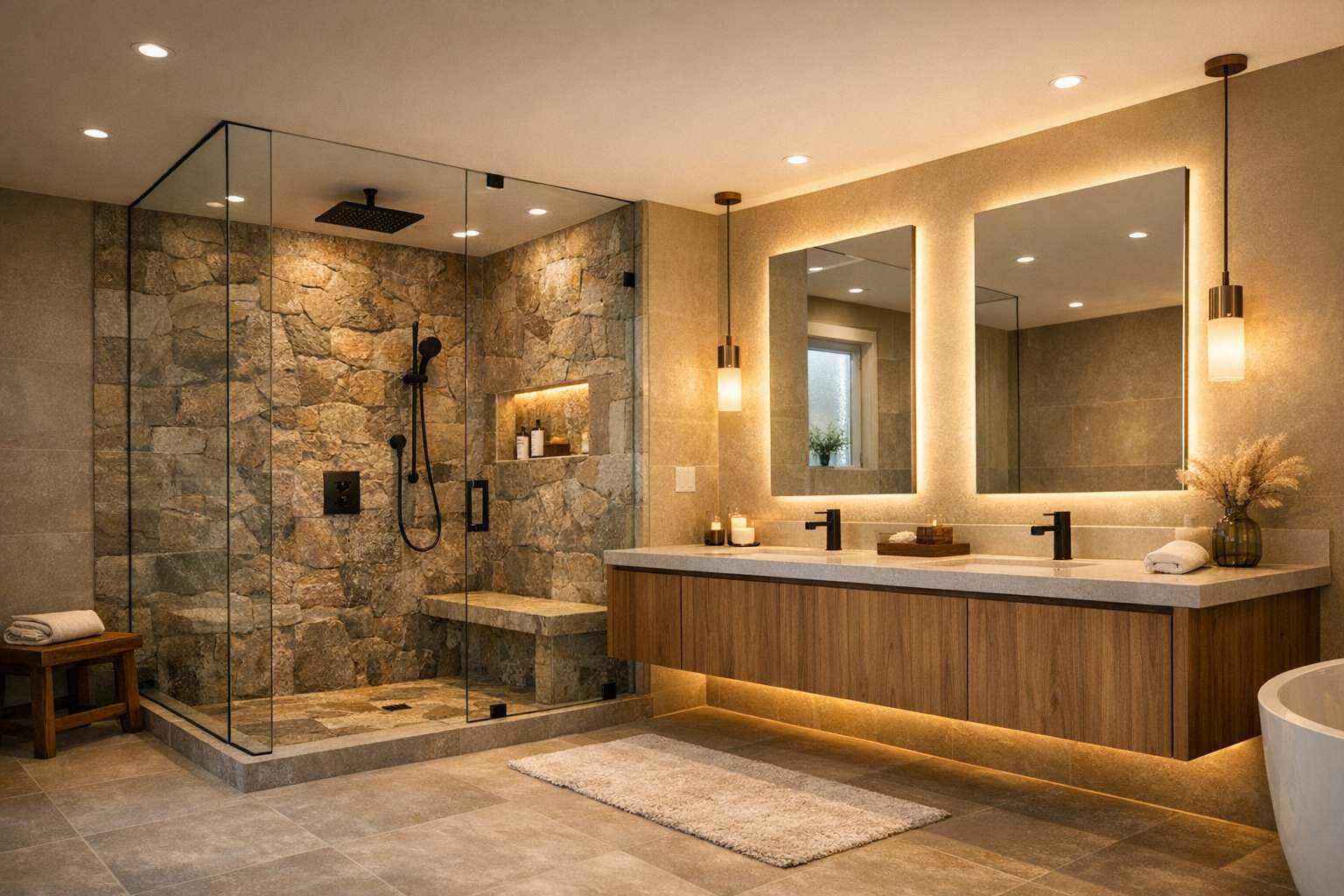
A photo-to-design tool such as Bathroom Design Decor can sit in that process as a fast way to test a bathroom makeover on your walls before you buy samples. Treat the images as a brief, not as a permit set.
Scope the Remodel Before You Touch a Tile
Name the job in one sentence and put that sentence at the top of every email. A cosmetic bathroom makeover, a same-footprint renovation, and a gut remodel that moves the shower are three different projects. If you and your partner are using different words, you will bid the wrong contractors.
Cosmetic means you keep the tub or shower location, keep the toilet rough-in, and change what the eye hits: vanity, faucet, lighting, mirror, paint, maybe a new toilet, maybe a tile refresh on walls that are still sound. This is the right bathroom remodel when the layout already works and you are tired of the oak vanity from 1998. It is the wrong job when you cannot turn around in the shower or when two people fight over a 24-inch sink.
Same-footprint renovation means new tile, new waterproofing, new fixtures, and often a new shower glass, but the drain, the toilet flange, and the vanity waste stay where they are. This is the sweet spot for most American hall baths. You get a new room without opening the floor of the bedroom next door. You still need a real shower pan or a properly sloped mortar bed. You still need a fan that can clear steam. You do not get to pretend a “tile-over-tile” weekend will fix a pan that already leaks.
Gut and relocate means the shower moves, the vanity jumps to another wall, or you steal a closet to make a larger bath. This is a plumbing and sometimes a framing project. Moving a toilet even a few inches can mean opening the floor. Moving a shower drain can mean a new pan, a new vent, and a conversation with whoever lives under you in a condo. Price this as construction first and tile second.
Write a use brief before you shop. Who uses the room, at what hour, and for how long. Whether you need a tub for kids or guests. Whether aging-in-place grab bars should be blocked in the walls now even if you do not install them yet. Whether the door swings into a towel bar. Photograph every wall, the ceiling, the exhaust fan, and the access panel if you have one. Measure the room, the window sill height, and the distance from the toilet to the wall. Listing photos lie. Tape measures do not.
If you are choosing between a bathroom renovation and a “refresh,” be honest about water. Peeling paint around the shower, soft drywall at the tub deck, a fan that only recirculates steam, or a floor that feels spongy near the toilet are not décor problems. They are reasons to open the room. A pretty vanity on a wet subfloor is a delayed second remodel.
Plumbing, Waterproofing, and What Hides in the Walls
The expensive surprises in a bathroom remodel live where you cannot see them. Cast-iron stacks, galvanized supplies, a vent that was never installed, a shower that was tiled over a moldy backer, an exhaust fan that terminates in the attic — these are normal findings in houses built before the current owner’s Pinterest board. Budget a reserve for them. Do not spend the reserve on a sculptural tub you do not have the floor structure to hold.
Waterproofing is not optional in a wet room. In a shower, that means a system: a liner or a bonded waterproof membrane, a sloped pan, and a drain that can actually receive water. Cement board is a backer, not a waterproofing layer. Greenboard is not a shower wall. If a contractor talks only about “good thinset” and never about the membrane, keep interviewing.
The shower is the heart of most bathroom renovation budgets. A tub-to-shower conversion is a popular makeover and a common place to cut corners. You need a new pan, not a tray of tile sitting on the old tub deck. You need a curb or a curbless detail that was designed, not improvised. You need valves that are comfortable to reach without standing in cold water. A rain head is fine as a second outlet. As the only shower, it is a poor rinse and a steam factory.
Toilets have a rough-in. In the United States that is often 12 inches from the finished wall to the flange center, sometimes 10 or 14. Measure before you fall in love with a compact wall-hung fixture that needs a carrier in the wall. Comfort-height toilets help a lot of households. Bidets and bidet seats need a GFCI outlet. Plan the outlet before the tile goes up.
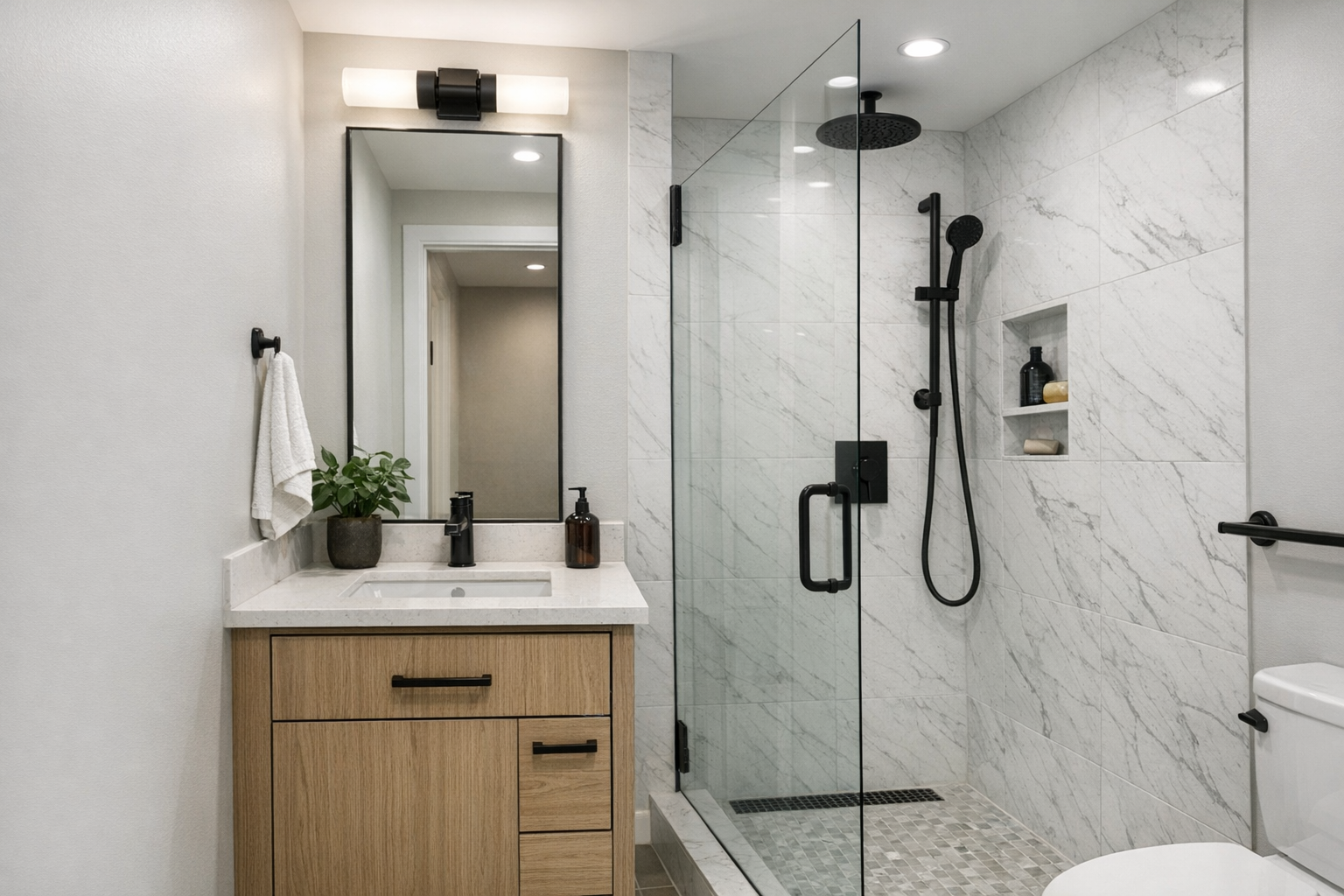
Vanities are furniture that hide a trap. A 36-inch vanity with a single sink is easier to live with than a 60-inch double that leaves no counter for a toothbrush. Drawers beat a giant empty box. The trap and the supply lines will steal a chunk of that box; look at the interior before you buy online from a photo of the front. Wall-hung vanities make a small floor look larger and they need blocking in the studs. If you are already opening walls, add the blocking.
Ventilation is part of waterproofing. A quiet fan that vents through the roof or a sidewall will do more for your paint and your grout than a luxury candle. Size the fan for the room, put it on a timer or a humidity sensor, and confirm the duct does not dump into the soffit. A bathroom remodel that skips the fan is a mold subscription.
Electrical belongs in the first walk-through, not the last. GFCI protection, a dedicated circuit for heat if you want a towel warmer or floor heat, lighting that is rated for a damp or wet location, and a switch you can find with wet hands. Recessed cans in a shower need the right trim. A chandelier over a tub has clearance rules. Talk to the electrician before you buy the fixture from a living-room catalog.
Fixtures, Ventilation, and the Decisions That Lock the Budget
Fixtures lock dimensions. Once the shower valve is in the wall and the drain is in the floor, you are not casually swapping a 60-inch tub for a 42-inch walk-in. Choose the tub or shower, the toilet, and the vanity size before you fall in love with a wall tile. Then choose the faucet finish family and repeat it: vanity, shower trim, robe hooks, maybe the sconce metal. Mixed metals look intentional when one finish leads and the second shows up two or three times. They look accidental when every store run added a new color.
Spend first on the invisible and the hard to redo: waterproofing, a decent valve, a fan, lighting, and a vanity that stores what you actually own. Spend second on tile you will see every morning. Spend last on accessories. A great shower with a simple chrome trim will age better than a bargain pan under a boutique rain system.
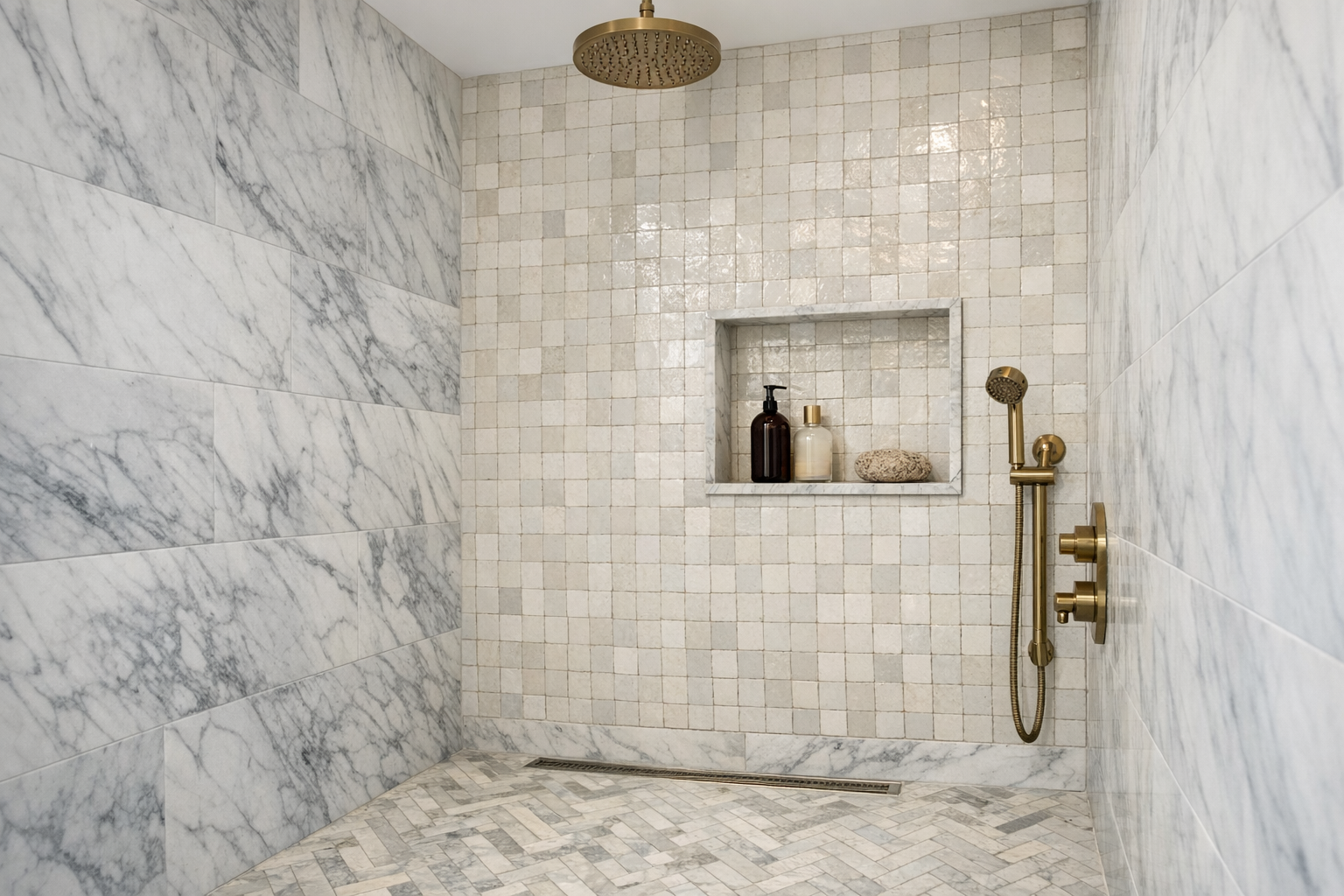
Tile is both finish and armor. Large-format porcelain on walls can look quiet and reduce grout. Mosaics on the shower floor give you slope and traction. A stone that needs sealing is a maintenance personality, not a moral failing — just know you are signing up. Grout color does as much as the tile. A high-contrast grout is a grid you will stare at for a decade. A blended grout is calmer and shows wear differently. Pick it in the room, not under showroom lights.
Glass is a fixture, not an afterthought. A framed door is honest and serviceable. A heavy frameless panel needs the right clamps, the right out-of-plumb walls, and a cleaner who will actually squeegee. A shower curtain is still a valid choice in a rental or a kids’ bath. Do not let a magazine tell you otherwise.
Flooring outside the shower has to tolerate wet feet and the occasional overflow. Porcelain is the default for a reason. Natural stone is beautiful and can be slick. Vinyl can be the right call in a basement bath if you are honest about it. If you want heated floors, decide before the mortar bed. Retrofitting heat under a finished floor is a different project.
Storage is a remodel decision. A recessed medicine cabinet needs a bay between studs. A niche in the shower needs to be waterproofed as part of the wall, not glued on later. A linen closet you steal from the hall may be worth more than a second sink. Build storage into the plan. Baskets on the toilet tank are not a storage plan.
If you want to test how a bathroom makeover might look on your actual room, upload a clear, well-lit photo to Bathroom Design Decor and try two or three directions — warmer tile, a darker vanity, a brighter wet room — before you write a deposit check. The images come back in about a minute. They will not know your joists or your HOA rules. They will help two people stop arguing about “modern” versus “the photo I liked in March.”
A Remodel Sequence You Can Hand to a Contractor
A good bathroom remodel is boring on purpose. The sequence exists so you do not buy tile in April and discover in June that the new vanity door hits the toilet.
Start with scope and measurements. Decide tub versus shower, vanity width, whether plumbing moves, and whether the door or a wall will change. Get a plumber and, if the ceiling or fan is involved, an HVAC or insulation person to look at the house. In a condo, read the renovation rules before you bid the job.
Next, select fixtures that have lead times. Tubs, vanities, and some faucets take weeks. Tile can too. The shower valve should be on site before the plumber closes the wall. The toilet should be chosen before the flange is set relative to a new floor height. Write model numbers on one sheet. Change orders start when someone says “we will pick that later.”
Then demo and open the wet walls. Look at the subfloor, the drain, the vent, and the wiring. This is when the reserve gets used, if it gets used. Do not tile over a question mark.
Rough plumbing and electrical come next: new valve, new drain if needed, new fan duct, boxes for sconces and GFCI, blocking for vanities, grab bars, and glass. Inspections happen here in many jurisdictions. Do not skip them to save a week.
Waterproofing, backer, and pans are the unphotogenic middle. Take photos of the membrane before it is covered. If a liner is used, flood-test the pan. If a bonded membrane is used, follow the system — the same brand of board, tape, and thinset the manufacturer wrote down.
Then tile, stone, and the vanity set. Counters if you have a separate top. Glass measurements should happen after tile, not from a sketch. Plumbing trim, toilet, mirrors, and accessories come last. Caulk is a finish. Cheap caulk around a beautiful shower is what you will notice.
Live-through planning is part of the remodel. A primary bathroom renovation means a second shower somewhere in the house or a gym membership you actually use. A hall bath may be the only toilet. Sequence the work or rent a temporary. This is not glamorous and it is why some families remodel the guest bath first.
Budget like a homeowner, not like a television reveal. Keep money for the surprise behind the tile. Keep a written allowance for fixtures so the contractor is not guessing. Spend on the shower assembly and the ventilation before you spend on art. A bathroom remodel that smells dry in August is a successful project even if the stool is from a catalog.
If you only remember four remodel rules: keep water in the shower, get steam out of the room, lock fixture sizes before tile, and finish the details you touch every morning. Style is the layer you apply after the room already works.
Frequently Asked Questions
What should I decide first in a bathroom remodel?
Decide whether plumbing stays. Same-footprint work and a relocated shower are different jobs. Then lock tub versus walk-in, vanity width, and whether you need a real exhaust upgrade. Color is the easy meeting. The hard meeting is the drain meeting.
How long does a bathroom renovation usually take?
A cosmetic makeover can be days if nothing is wet and nothing is back-ordered. A full hall bath on the same footprint is often a matter of weeks once materials are on site. A gut that moves plumbing or waits on a custom shower glass stretches longer. Lead times, not labor hours, usually set the calendar.
Is a bathroom makeover enough, or do I need a full remodel?
If the pan is sound, the fan works, and the layout serves the people who use the room, a makeover can be enough. If you have leaks, soft floors, or a shower you hate using, opening the room is cheaper than decorating around a failure.
Can I plan a bathroom remodel from a photo?
A photo is enough to test vanity color, tile mood, and whether a darker room still feels like your house. It is not enough to order a curb or a glass panel. Use a visualization as a conversation piece, then have a plumber or designer measure.
Do I need a permit for a bathroom remodel?
Many cities want a permit when you move plumbing, change electrical, or alter a wet area. Cosmetic swaps may not. Ask the building department or your contractor before demo. Permit-skirting is how a simple sale later becomes a story.
See the Remodel on Your Bathroom First
If you want to test a bathroom remodel on the room you already have, upload a photo at bathroomdesigndecor.com/create. Bathroom Design Decor turns that picture into photorealistic options in about 60 seconds so you can compare a bathroom makeover before you write a fixture check.
Checkout runs through Polar. Plans start at $14 a month for a single-room sprint, with higher tiers if you are designing more than one bath. Twenty styles are on the site today. Compare options on pricing, pick a direction you can live with, and take the images to your contractor as a clearer brief than a folder of unrelated screenshots.