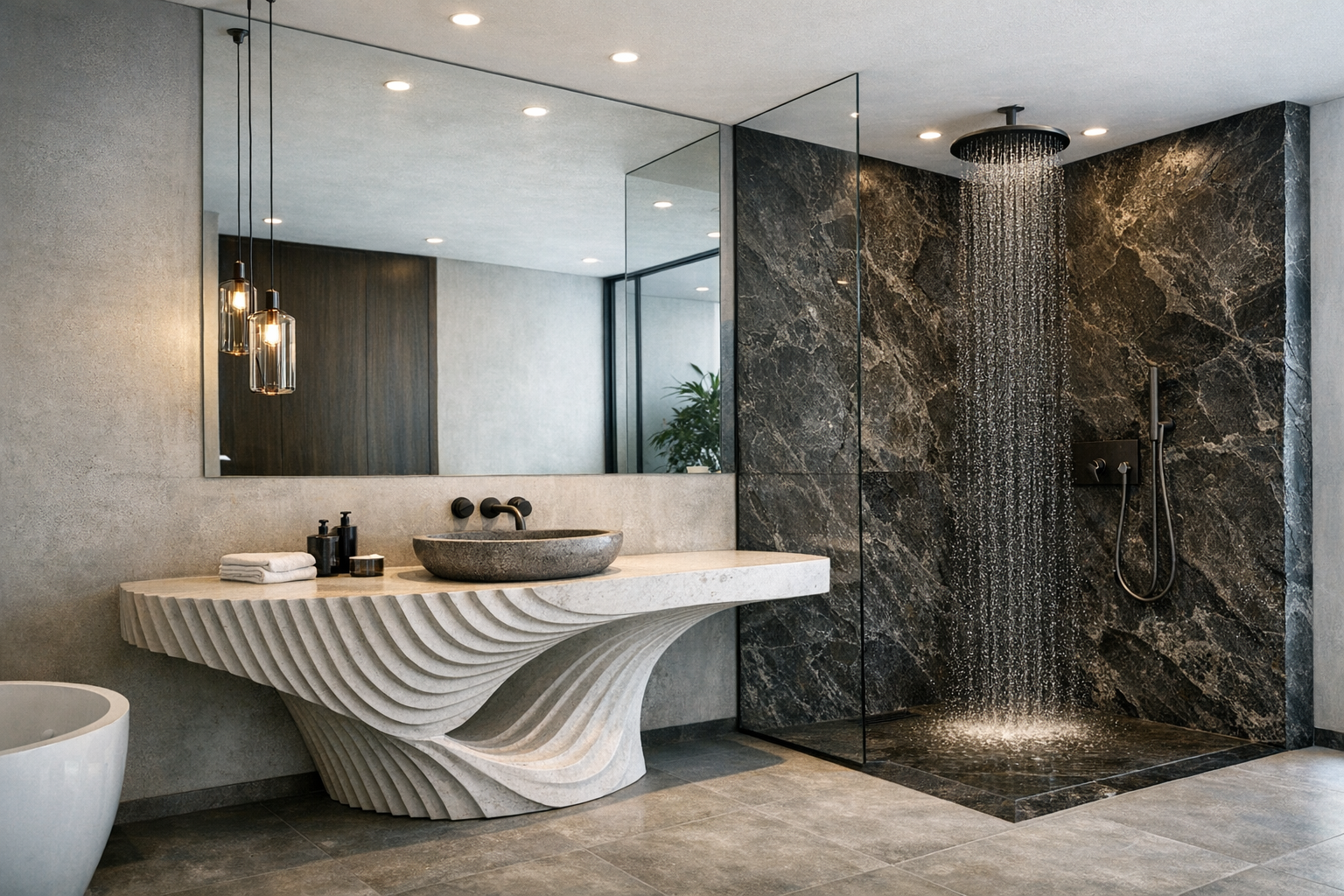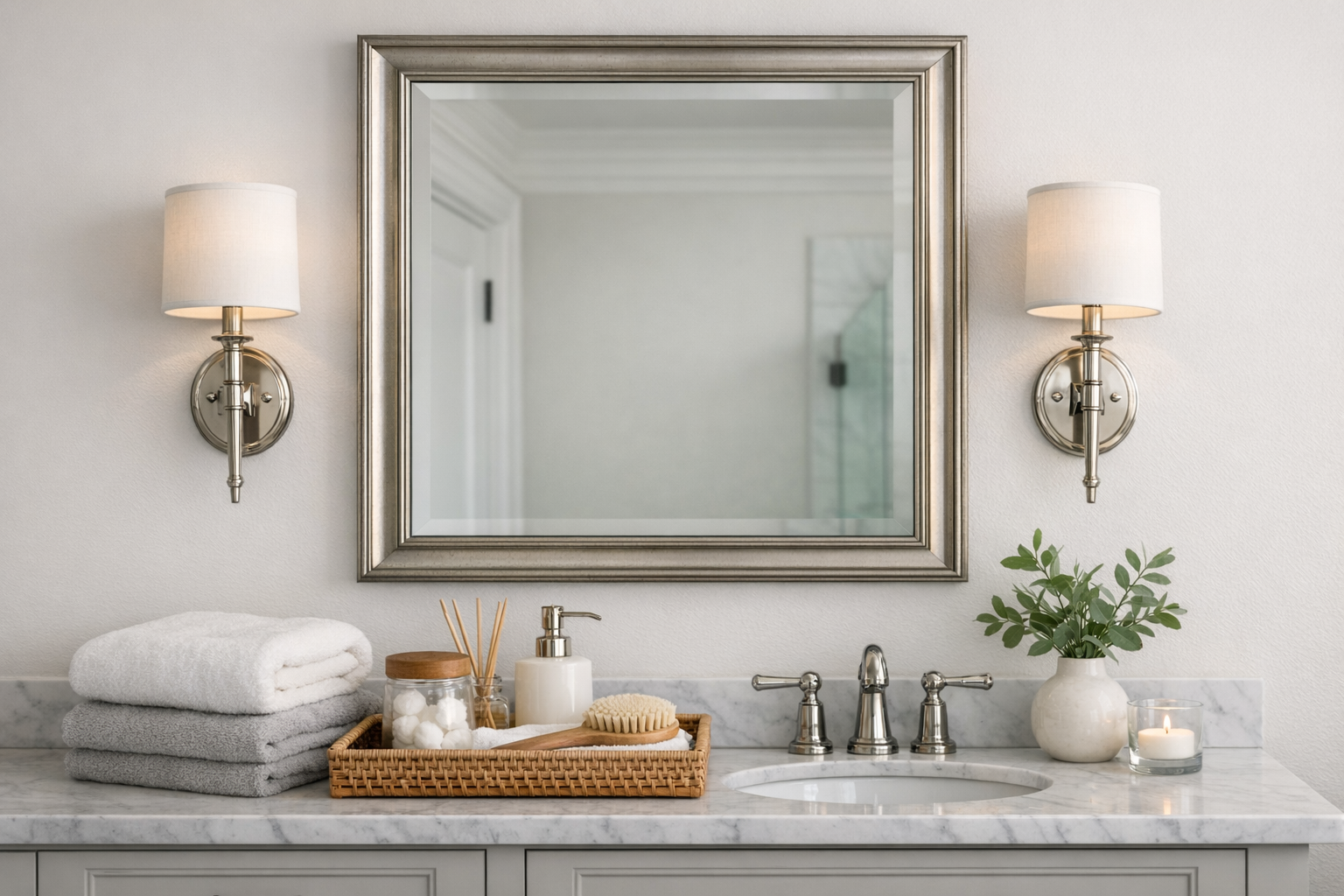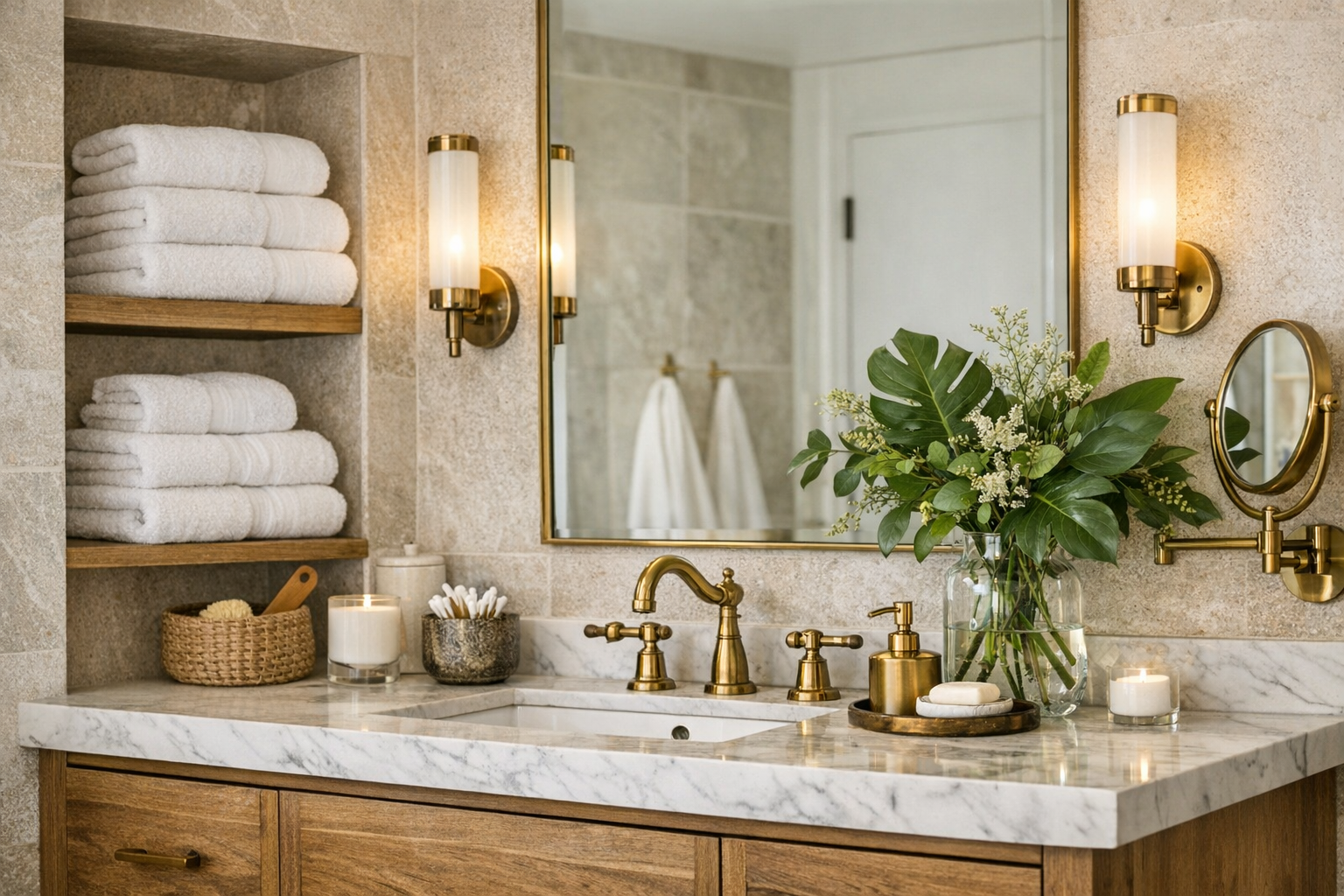
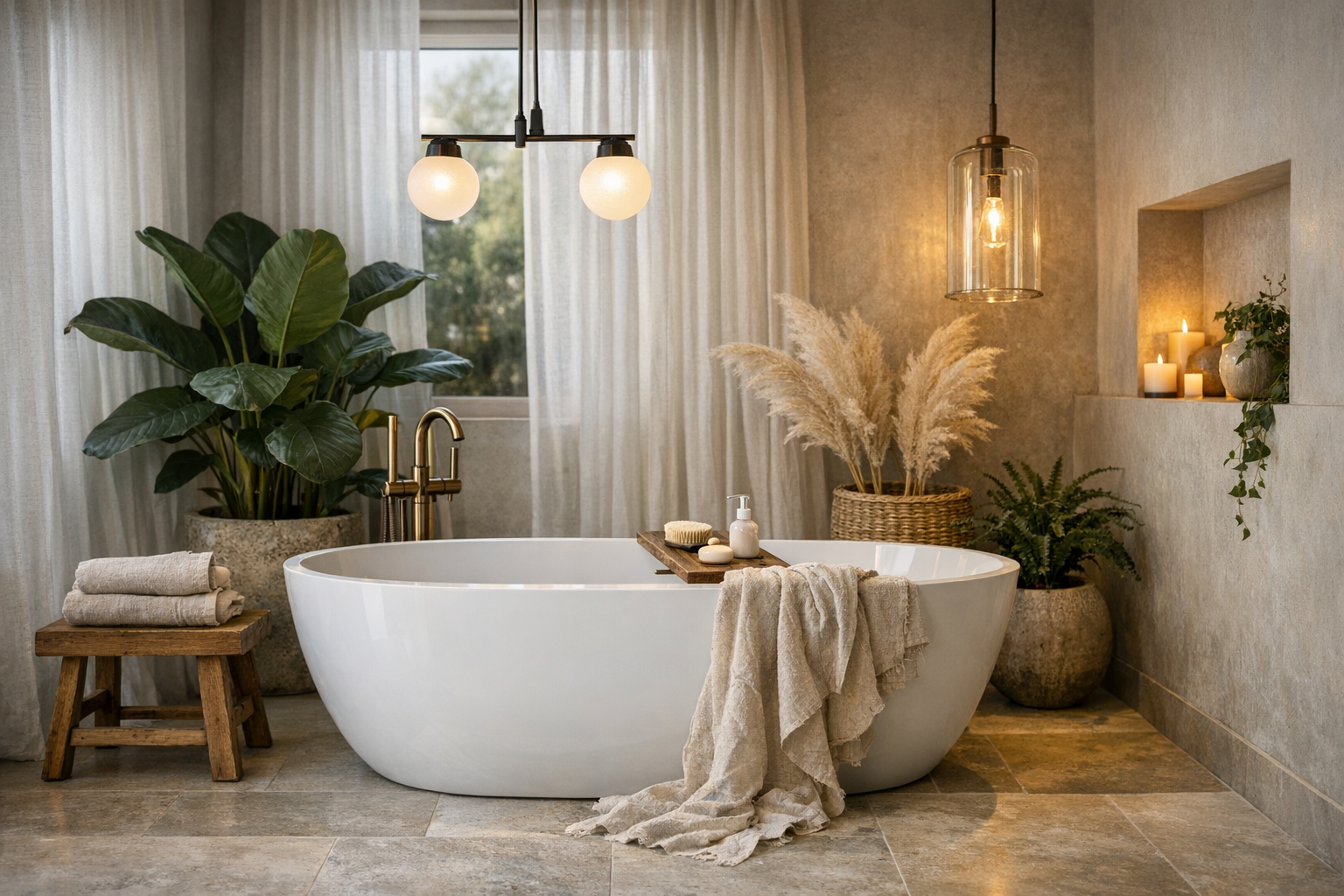
Bathroom ideas are cheap until you grout them. A folder of hotel suites, limewash powder rooms, and black-and-white checkerboard floors is a hobby. A buildable idea is a short list: how the room should feel at 6 a.m., which wall can take water, and which two finishes will carry the rest. Most homeowners do not fail at taste. They fail at editing. They try to use every new bathroom idea they saved, and the room becomes a showroom of unrelated samples.
I trained in interior architecture and I use early visualization for proportion more than for shopping. The question I ask first is not “what style are you?” It is “which ideas still work when we put them on this window, this ceiling height, and this door swing?” This guide is how to collect bathroom design ideas without drowning, how to match them to the kind of bath you actually have, and how to turn a mood into a brief a contractor can price.
A photo-first tool such as Bathroom Design Decor is useful here because it applies an idea to your geometry in about a minute. That is often enough to retire half the folder.
How to Collect Bathroom Ideas Without Getting Lost
Give every saved image a job. If you cannot say whether you saved it for the tile, the light, the vanity shape, or the feeling of empty counter, it is not an idea yet. It is a picture. Tag your folder in four buckets: layout, wet surfaces, dry surfaces, and atmosphere. Layout is a curbless shower or a vanity on a new wall. Wet surfaces are shower tile and floor. Dry surfaces are paint, wallpaper, and the vanity finish. Atmosphere is light, metal, and how much visual quiet you want.
Limit the folder. Twenty strong bathroom ideas are more useful than two hundred. When two images fight — warm plaster versus high-contrast marble, spa-calm versus boutique-hotel gloss — do not average them. Pick a leader. A room can take one character surface. If the shower tile is the character, the floor and the vanity should support it. If the vanity is a dark wood event, the tile should not also be an event.
Visit one finished bathroom in person if you can: a showroom wet room, a friend’s remodel, a hotel you can study without stealing the soap. Photos flatten grout, hide the smell of a bad fan, and lie about how much a dark tile steals from a north window. New bathroom ideas that survive a visit are the ones worth taking home.
Write constraints next to the ideas. “We cannot move the toilet.” “The window stays in the shower wall.” “We need a tub for a toddler.” “This is a condo and the fan must stay in this chase.” Constraints are not the enemy of bathroom design ideas. They are the filter that makes an idea specific to your house.
Watch for ideas that are actually products in disguise. A particular sconce, a particular checkerboard, a particular fluted vanity can be bought. A feeling — “like a small European hotel” — cannot. Translate feelings into specifications: warm plaster or painted wall, a small hexagonal floor, a single brass finish, a mirror with a thin frame, a shower that does not try to be a spa cave. That translation is the work.
Ideas by Room: Primary, Guest, and Kids' Baths
A primary bathroom can carry a stronger idea because you live with it and you control the clutter. This is where a quieter luxury works: larger tile, a longer vanity, better light at the face, a shower you do not rush. It is also where people over-idea. A freestanding tub needs a floor that can hold it, a filler that will not splash the wall, and enough leftover room that the toilet does not feel like an afterthought. If the tub is only for the listing photo, spend the money on the shower and the fan.
Guest baths and powder rooms are allowed to be more theatrical because visits are short. Wallpaper, a darker paint, a sculptural sconce, a bold floor — these bathroom ideas work when steam is limited and storage is not a daily fight. They fail when you copy a powder-room wallpaper into a family shower room. Guest rooms can also stay simple: a calm tile, a decent vanity, a mirror that makes the room feel twice as wide. Simple is an idea.
Kids’ and hall baths need ideas that survive product bottles and wet towels. A tub may stay. Floors need grip. Glass may lose to a curtain for a few years. Storage should be closed. Color can live on the vanity or the towels so you can change it without a second renovation. New bathroom ideas for family baths are often about hooks, a bench, and a fan, not about a niche lined in brass.
Shared Jack-and-Jill bathrooms need an idea for privacy as much as for tile: locks, a toilet room if you can steal the space, two mirrors if two people leave at the same time. The prettiest subway tile will not fix a door that opens onto someone at the sink.
Basement and interior baths have no window. The idea has to include light. A bright value on the walls, a stronger mirror, a wet-rated ceiling light, and a pale floor will do more than a dark spa palette copied from a room with a garden view. If you want drama in a windowless bath, put it on one wall and keep the rest reflective.
Condo bathrooms add a political layer. Stacks, waterproofing rules, quiet hours, and elevator reservations shape which bathroom ideas are legal. A curbless shower may be a floor-build issue. A heavy stone slab may be a weight issue. Check before you fall in love.
Style Directions Worth Testing on Your Walls
Style names are shortcuts, not religions. Use them to brief a tool or a designer, then edit against your house.
Quiet modern is large tile, a simple vanity, mixed or black metal, and empty counters. It needs hidden storage or it looks unfinished by week two. Transitional is the American default: a shaker or slab vanity, a marble-look quartz, a classic sconce, tile that does not shout. It is a good idea when the rest of the house is already that language.
Coastal and Scandinavian ideas share light wood, pale stone, and air. They fail in a windowless hall bath if you also pick a gray-beige that goes dirty. Organic modern — plaster, curves, warm stone — needs real texture. A printed “plaster look” vinyl and a curved mirror are not the same idea.
Traditional and English cottage ideas use paneling, a furniture vanity, and a warmer metal. They need restraint on pattern. One floral or one checkerboard, not both. Mediterranean and Spanish ideas use plaster, patterned tile, and darker wood. They want sun. In a dark bath, scale the pattern down and keep the field lighter.
You do not need to name a style if you can name three finishes. Example: white vertical stacked tile, white oak vanity, unlacquered brass, large-format taupe floor. That is a complete idea. Twenty named styles exist on Bathroom Design Decor if you want a starting label — modern, Japandi, farmhouse, Parisian, and the rest — but the label is only a door into the room.
Test two directions, not twelve. A warm option and a cooler option. A darker vanity and a lighter one. Print them. Look at them at night. Bathroom design ideas that only work in a noon photograph are not ideas you will like in February.
For that test, a straight photo of your existing bath is enough. Upload it at Bathroom Design Decor, run the same room in two styles, and keep the one that still looks like a place you would brush your teeth. Results take about a minute. That speed is the point: ideas should be cheap to try and expensive to build.
From Idea Folder to a Buildable Brief
A brief is one page. At the top: which bath, who uses it, what must stay (window, toilet, stack). Then the idea in four lines: shower type, vanity width and finish, tile story, metal. Then a “not this” list: no vessel sink, no dark grout, no chandelier over the tub, no open shelves for medicine. Contractors are better at avoiding a named mistake than at channeling a vibe.
Attach two or three images that agree with each other. If you attach twenty, you have not edited. If you attach a hotel lobby and a cabin, you have given the contractor a coin flip.
Price the idea before you romanticize it. A full shower rebuild, new glass, and a custom vanity is a different number than a vanity swap and paint. If the idea requires moving a drain, write that in bold. New bathroom ideas that ignore plumbing are fiction.
Sequence the decisions. Idea and constraints, then plan, then materials in person, then trades. Do not buy the wallpaper for a wall you may open. Do not buy the sconce before you know whether the box can land beside the mirror.
Live with the brief for a week. If you keep adding a fourth finish, you do not have an idea yet. If you keep subtracting, you are getting closer.
If you only remember four rules for bathroom ideas: give each image a job, match the idea to the type of bath, test it on your own walls, and write a short “not this” list. Editing is the design skill.
Frequently Asked Questions
How many bathroom ideas should I take to a contractor?
Two or three images that tell the same story, plus a written brief. A large folder reads as indecision and gets priced as risk. Edit first.
What if my partner and I like different bathroom design ideas?
Put both ideas on a photo of the actual room and compare them in the same light. The argument is usually about a hotel versus your window, not about taste. A shared picture of your bath ends more fights than a debate about style names.
Are new bathroom ideas always a full remodel?
No. Some ideas are a vanity, a mirror, and a better fan. Some are a shower rebuild. Name the scope so the idea does not quietly become a gut renovation.
Can I mix styles in one bathroom?
You can mix references if one surface leads and the others support. Mixing two lead characters — busy floor and busy shower and a furniture vanity — is how rooms look tired in a year.
Where should I look for ideas besides social media?
Showrooms, recently remodeled houses you can visit, and a visualization of your own photo. Social media is useful for a single detail. It is a poor source for a whole-room plan because it hides the constraints.
Try These Bathroom Ideas on Your Photo
If you want to see bathroom ideas on the room you already have, upload a photo at bathroomdesigndecor.com/create. Bathroom Design Decor applies twenty styles to your walls in about 60 seconds so you can retire the ideas that only worked in someone else’s house.
Plans start at $14 a month through Polar. Compare tiers on pricing, keep the one direction that still feels like home, and take that brief to your contractor instead of a folder of conflicting screenshots.